
Sevier County Deed Types and Their Work
Warranty deeds, reconveyances, and federal tax liens appear in the Recorder's electronic index. So do similar instruments. Labels matter, but only up to a point. A deed records a conveyance. A mortgage, lien, release, or easement records a different legal event entirely. Reading the full instrument language and legal description tells you what a filing actually did. The county publishes no start year for the electronic index. Treat any other coverage date as a guess.
| Deed Type | What It Does | Common Use |
|---|---|---|
| Warranty deed | Conveys the stated interest with the deed's warranties | Common recorded ownership transfer |
| Quitclaim deed | Conveys whatever interest the grantor holds | Family or title cleanup transfer |
| Reconveyance | Records a release after a secured debt is paid | Check a mortgage trail |
| Trustee or executor deed | Transfers through an appointed fiduciary | Estate or trustee conveyance |
| Federal tax lien | Records a government claim against property | Search liens and later releases |
Every deed names a grantor and a grantee. It also describes the interest conveyed. Mortgages and liens work differently; they can burden a parcel without moving ownership. A reconveyance or release may clear one recorded claim. Yet an online account abstract is never a complete lien search. For that, Sevier County points to the abstract tract indexes kept in the Recorder's office.
Walking the Sevier County Party Index
The grantor-grantee method walks both sides of a conveyance. A grantor gives the interest. A grantee receives it. To trace a parcel backward, begin with the most recent vesting deed and note its grantor, then hunt for an earlier filing where that same person appears as grantee. Match the legal description and parcel history each step of the way. Names shift positions across documents, so trust the instrument itself over any name-only match.
- Locate the newest deed that vests the current owner as grantee.
- Write down the grantor, recording date, document type, and legal description.
- Search that grantor's name as a grantee to find the earlier vesting deed.
- Repeat the check, using the tract description when parcel numbers have changed.
- Grantor
- The party transferring the stated interest.
- Grantee
- The party receiving the stated interest.
- Chain of title
- The linked sequence of instruments affecting the tract.
- Abstract tract index
- The Recorder's office index used for a complete title or lien search.
Getting a Sevier County Deed Copy
Browsing the public index costs nothing. Document images are another matter. The county requires a visit to the Recorder's office to view them. Call 435-893-0411 before going. Ask which copy formats exist and what identification or written request the office wants. Ask what the current charge runs, too. The county's recording-fee page covers filing new documents only. It does not list the price of pulling an old deed image.
Recorded, not guaranteed. The Sevier County deed index shows filings located in that system, not every possible interest. The Recorder says the complete title and lien review requires its abstract tract indexes.
Sevier County's Recorder Search Modes
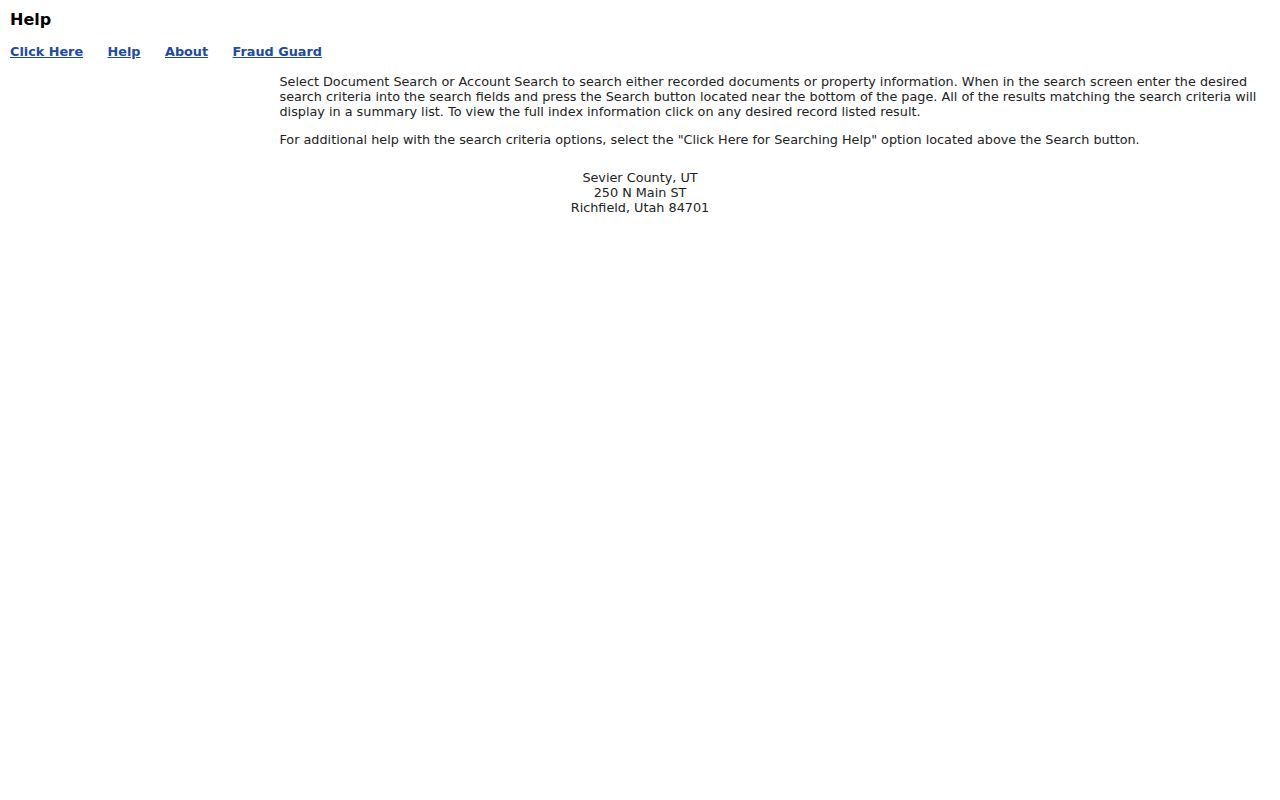
The Recorder-Assessor portal splits lookups into Account Search and Document Search. Pick a mode, enter your criteria, and hit Search near the bottom. A result summary appears, and opening a matching row shows the full index information. The live form's dropdowns and fields may differ from any assumed setup, so rely on the portal's own Help and About links for what the page truly offers rather than guessing at a name box or date filter.
| Portal control | Verified role | Limit |
|---|---|---|
| Document Search | Recorded instruments | Detailed subfields not captured |
| Account Search | Owners, values, taxes, legal data, abstracted documents | Account result is not a title opinion |
| Search | Returns a summary list | Open a match for full index detail |
| Help / About | Instructions and coverage notes | Use current portal content |
| Fraud Guard | Property recording alert destination | Alert service does not prove title |
The Recorder search help page spells out the steps for choosing a mode and opening a result.
Field labels can vary, so try multiple spellings. Ask Recorder staff about anything unclear.
Sevier County Index and Deed Images
Index information is free to view, the county says. Instrument images take a separate route. The Recorder's notice sends users to the office to see the documents themselves. Its About page describes coverage stretching back to the first day of electronic indexing and forward through the newest filing. It names no start date, though. Warranty deeds, reconveyances, and federal tax liens appear as examples. Other recorded instruments appear too, as examples of what the index holds.
A summary result points to an instrument without exposing its full terms online. Building a chain takes some care. Check both party names, the recording date, the instrument type, the legal description, and any parcel reference. For exact wording or a signature, request the image from the custodian. That split defines Sevier County deed records. The free index is a research tool, while deeper title work needs the record image and the abstract.
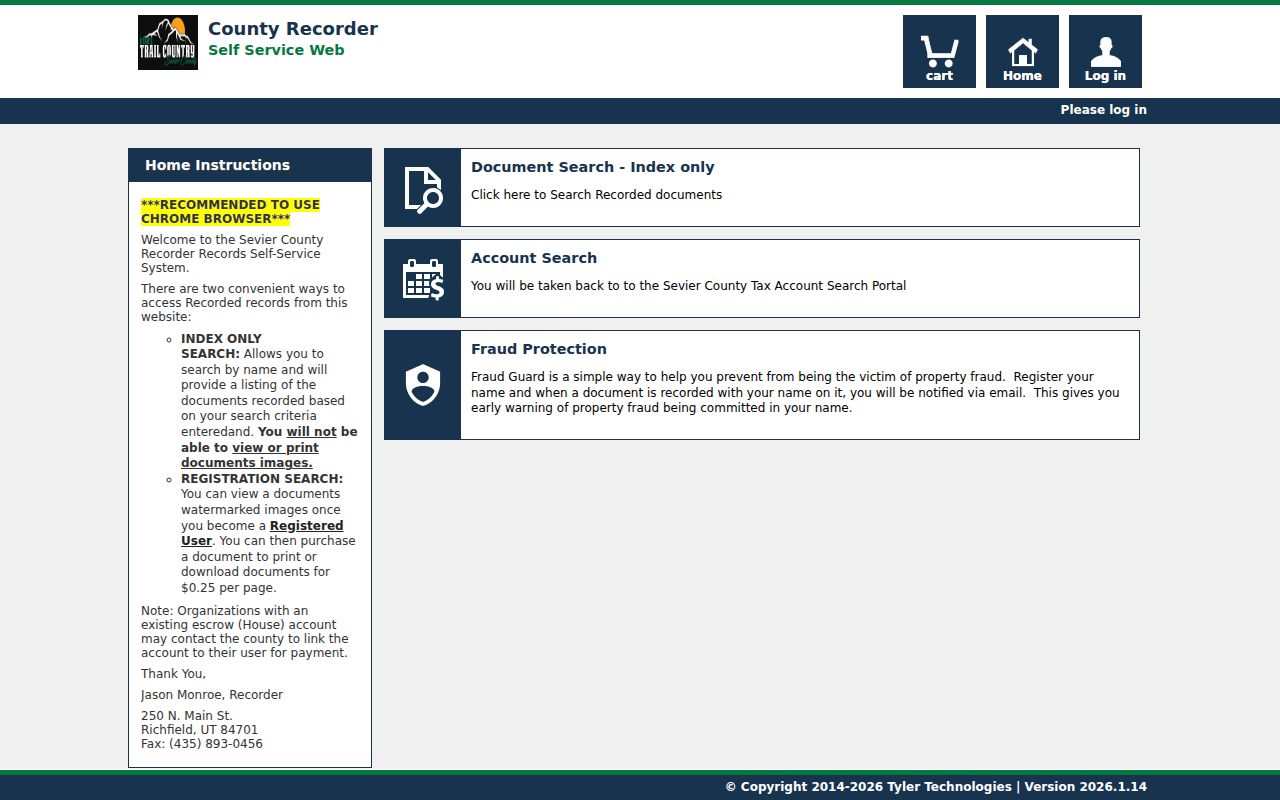
The county's Document Web route is the public instrument search interface.
Keep every confirmed deed reference when tracing prior owners; the former-owner chain method leans on those references to work backward.
Sevier County Abstract Tract Index
The Recorder draws a firm line between its computer documents and a complete title search. The full search must run through the abstract tract indexes in the office. Its notice requires that. An abstract links conveyances and encumbrances to the tract over time. It records dates, instrument kinds, and book or page references. A web result can flag likely documents. A blank result proves no recorded claim exists.
Bring the parcel number, account number, situs address, current legal description, and any older deed reference when asking for abstract help. A tract description often beats a current owner name. That holds especially where land passed through an estate. It also holds where land was split into new lots. The county's rule matters most for title and lien work. An incomplete online search could leave a hole in the history.
Sevier County Deeds Before May 2006
Older deeds carry a caution in Sevier County. The Recorder warns about documents dated before May 30, 2006. Parcel descriptions and numbers may not be current. The county calls it a reference tool only. The older work is not proofed. The county accepts no responsibility for gaps or errors in documents or associated parcel numbers. Read May 30, 2006 as a local warning. The electronic index began earlier, but the county leaves its start year unstated.
Numbers change over time. A current parcel number may fail to match an older deed. Compare the legal description, adjoining tracts, subdivision name, and later plats. A legal description can tie a prior lot to a present parcel. This holds even after a split or correction changed the identifier. Do not rely on the number alone across that cutoff.
Recording Time and Sevier County Fees
Recording and searching are different tasks. The county asks that paper documents arrive before 4:30 p.m., and later acceptance is at staff discretion based on volume and office conditions. E-recording runs through Simplifile, CSC, and Indecomm. Submit packages before 4:00 p.m. The county may need up to 30 minutes to receive one.
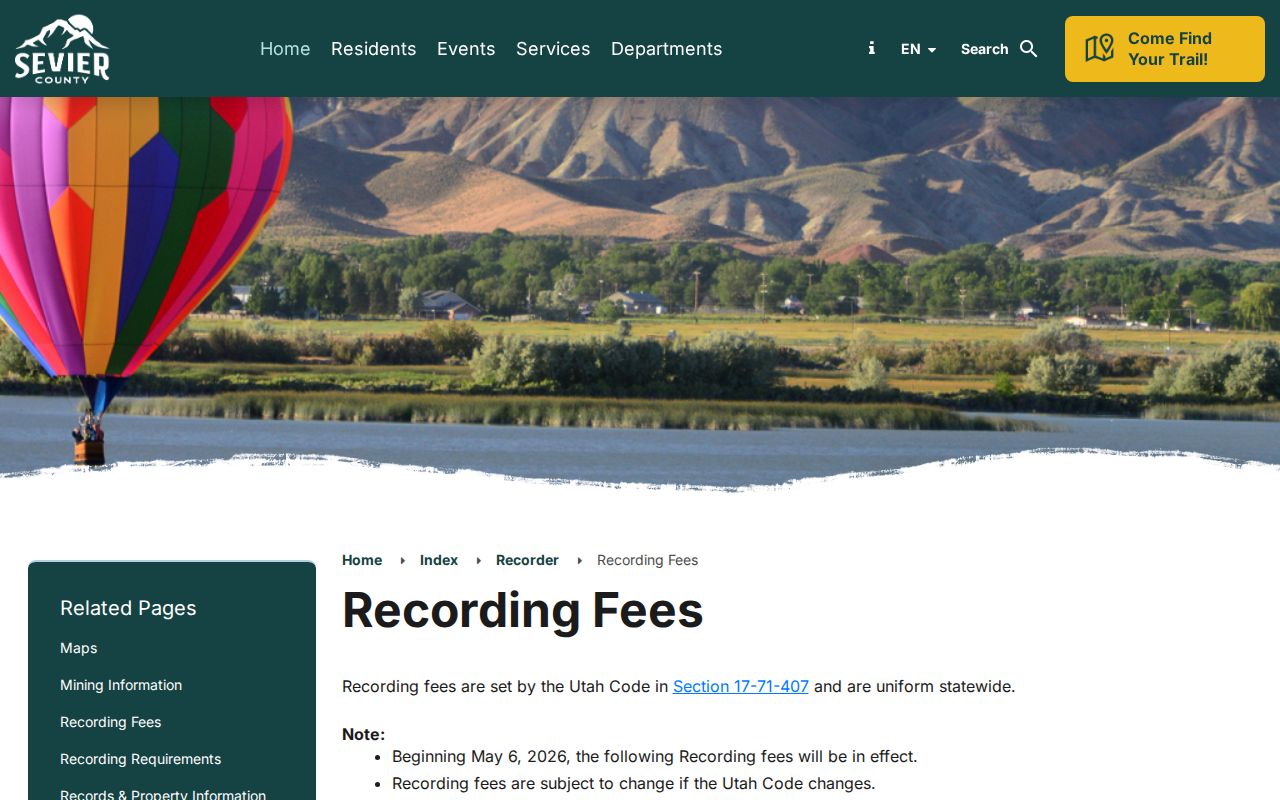
Fees can change. Check the county fee page rather than an amount copied from elsewhere. It covers filing costs, not the price of a deed copy or a title report. Confirm the current schedule before sending any document or payment. The Recorder's recording-fee page posts the current filing schedule for new documents.
A receipt or index entry for a deed filing confirms that the Sevier County recorder received the instrument; it does not replace review of the recorded document itself.
Sevier County's Fraud Guard Route
The Recorder portal links to Fraud Guard, a property-recording alert service. The official link explains the current sign-up process. Decide whether alerts fit the property. The county posts no alert rules, delivery timing, or fee. No alert service can promise to stop a filing or catch every instrument.
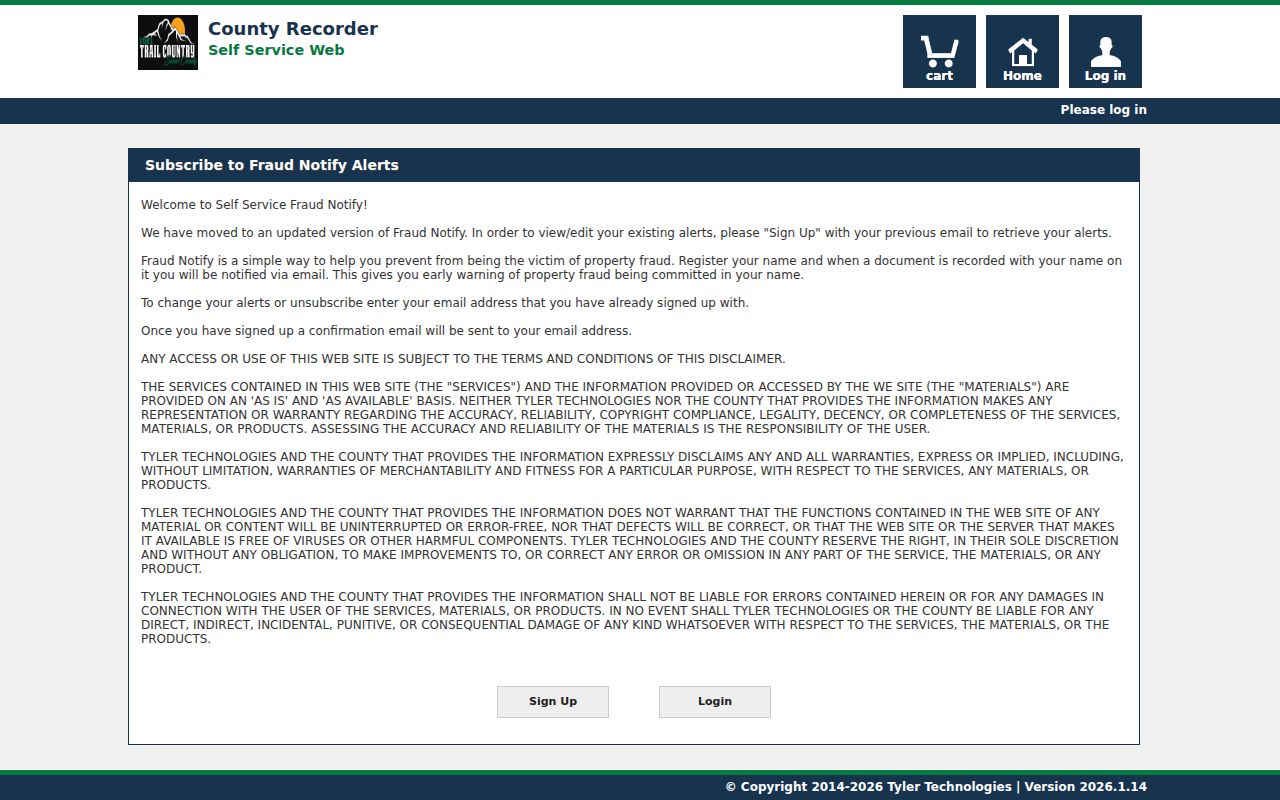
An unexpected transfer deserves a closer look. Locate the recording in the county index. Compare the grantor, grantee, document type, and legal description. Then contact the Recorder with the number on the portal. Check the original image. It matters most when a name or parcel looks unfamiliar. The Sevier County Fraud Guard page shows where the alert route begins.
Use Sevier County fraud alert information as a prompt to verify a public deed filing in the property records, not as a replacement for examining the recorded document.
Utah's Older Sevier County Indexes
Utah's 1888 recorder framework called for separate record classes. It included entry books, grantor and grantee indexes, tract abstracts, and map or plat indexes. That structure shapes old Sevier County land research. A modern parcel-number query may not reach it. Grantor indexes put a transferor's name in the search path. Grantee indexes work from the receiving party instead. Entry books can record the time received plus a short description. Names lead the way in these volumes.
The Utah State Archives land guide explains these record types and how they connect. Sevier County's archival agency page serves as another finding aid. It does not list deed-book year runs or microfilm reel numbers. Use the Archives catalog to identify a series. Then ask the Recorder or the archive. Request the volume or film holding the actual record. That route beats guessing.
Older indexes reward patient searching. The route suits house history, family research, and title work reaching beyond current parcel labels.
Sevier County Deeds and Recorded Plats
A deed's legal description may cite a lot and block, a named subdivision, or a rural survey location. Sevier County's plat cabinet indexes cover map number, date, surveyor or company, section, township, range, city, plat, and block. Keep those labels with the deed reference. A later plat or amendment can explain how a split or annexation changed the map. The earlier deed description still stands.
Richfield's records trace several waves of development. Indian Hills plats date to the 1970s. Park Retreat PUD work ran from 1997 to 2002, Willow Creek added condominium phases, and TOK townhomes arrived between 2022 and 2023. Salina's Cabinet A entries include Plat A Block 12, Valley, and Sunset North. A subdivision name works well as an index term. It does not prove every parcel there shares one identifier.