
Tracing Sevier County Prior Owners
Title chains grow one deed at a time. Start with the deed that vested the current owner of record, then treat its grantor as the next name to search. Match the tract by legal description, not by name. The Recorder offers a free online index. Its electronic starting year is not stated. Early history may call for an abstract, entry book, or archived plat.
| Source | Years It Covers | Where Held | What It Shows |
|---|---|---|---|
| Recorder electronic index | Start date not stated through latest document | Recorder-Assessor Web | Recorded parties and instrument summaries |
| Abstract tract indexes | Historical, exact year run not located | Recorder's office | Chain of title and encumbrances by tract |
| Deed books and entry books | Exact Sevier volumes not verified | Recorder / Archives finding aids | Earlier transfers and entry references |
| Plat cabinets and archival series | Cabinet-specific; older series vary | Recorder and Utah Archives | Lot, block, subdivision, and survey location |
Begin online for the newest index result. Older ground lies in the Archives. The Utah State Archives agency catalog lists historical Sevier series and film. Sevier County publishes no confirmed list of deed-book years or reel numbers, so coverage is hard to pin down in advance. Ask the Recorder or Archives first. Verify the right volume before requesting it.
Reconstructing the Sevier County Deed Chain
Grantor and grantee indexes face opposite directions. A grantor gave; a grantee received. The walk back begins with the newest vesting deed. Find its grantor, then hunt that same party as a grantee in an earlier filing. Every match needs a check of instrument type, date, and legal description. When a parcel number changed, a plat or abstract proves the earlier deed described the same tract.
- Locate the latest vesting deed and note the grantee and legal description.
- Record the grantor, date, instrument type, and book or document reference.
- Search that grantor as a grantee to find the earlier transfer into their ownership.
- Repeat until the electronic index no longer reaches the needed period, then ask for the abstract or older volumes.
- Grantor
- The party who conveyed an interest in an instrument.
- Grantee
- The party who received the stated interest.
- Chain of title
- The ordered set of recorded transfers affecting a tract.
- Legal description
- The land location that links older deeds when an address or parcel number changed.
How Far Sevier County Deed Records Reach
The Recorder's electronic index runs from its first digital entry to the latest filing. The start year stays unpublished. So the practical cutoff is no known calendar date. One date is precise, though. Documents recorded before May 30, 2006 may carry parcel numbers that no longer match current parcels and are not proofed for title work.
Older records. Sevier County's electronic index start date was not stated. Ask the Recorder which abstract, deed book, or archive series covers the earlier tract.
Older Sevier County Parcel References
Old parcel numbers cause plenty of confusion. Documents recorded before May 30, 2006 may describe parcels that no longer exist. That older index data was never proofed for title work. It serves as a reference tool. A mismatched parcel number never ends the search. Read the deed's legal description and compare it against later plats and tract references.
Splits, annexations, and corrections make the warning sting. A modern account may carry a new Parcel_Number while an earlier deed names a subdivision, block, section, or tract. Save every identifier and recording date along the way. The Recorder can connect old and current descriptions through its abstract indexes.
Sevier County Abstracts and Prior Owners
The abstract tract index anchors any complete title history. It ties conveyances and encumbrances to one tract. Each entry lists type, date, and book and page. The Recorder is blunt here. A full title or lien search must use the office abstract, not computer documents alone. That standard matters when former owners are traced for title work rather than a quick house history.
Come prepared to the office. Bring the latest deed, the current legal description, the parcel number, and any earlier document number. Ask how the tract changed over time. An entry book or plat index may bridge a gap in the chain. An abstract can explain why an old owner appeared under a different parcel label, but read it beside the source instruments.
Sevier County Plat Names in an Owner History
Plats give owner research a place-based thread. Prior owners often hide behind shifting parcel numbers. Sevier County's Cabinet indexes record the map number, date, surveyor or company, section, township, range, city, plat, and block. A lot-and-block description ties a transfer to its named subdivision. Rural land leans on the survey grid instead. Keep the plat name beside each deed entry rather than trusting a modern street address alone.
Richfield's plat history runs deep. The sequence includes Indian Hills plats from the 1970s, Park Retreat PUD and condominium phases from 1997 to 2002, Willow Creek, Poulson Estates, TOK townhomes, and Business Park amendments. Those entries date development activity, not ownership. The Richfield records chronology identifies city plat names to pair with the deed trail.
Sevier County Archives for Older Deeds
Older deeds live at the Utah State Archives. Its land guide explains abstracts, grantor and grantee indexes, entry books, tax rolls, subdivision indexes, and plats. The Sevier County Recorder agency page there points to historical series and finding aids. No deed-book years or reel numbers are published. Identify the series first. Then ask which volume or film fits the tract.
The Utah State Archives land guide maps the older record types a Sevier County deed search may need.
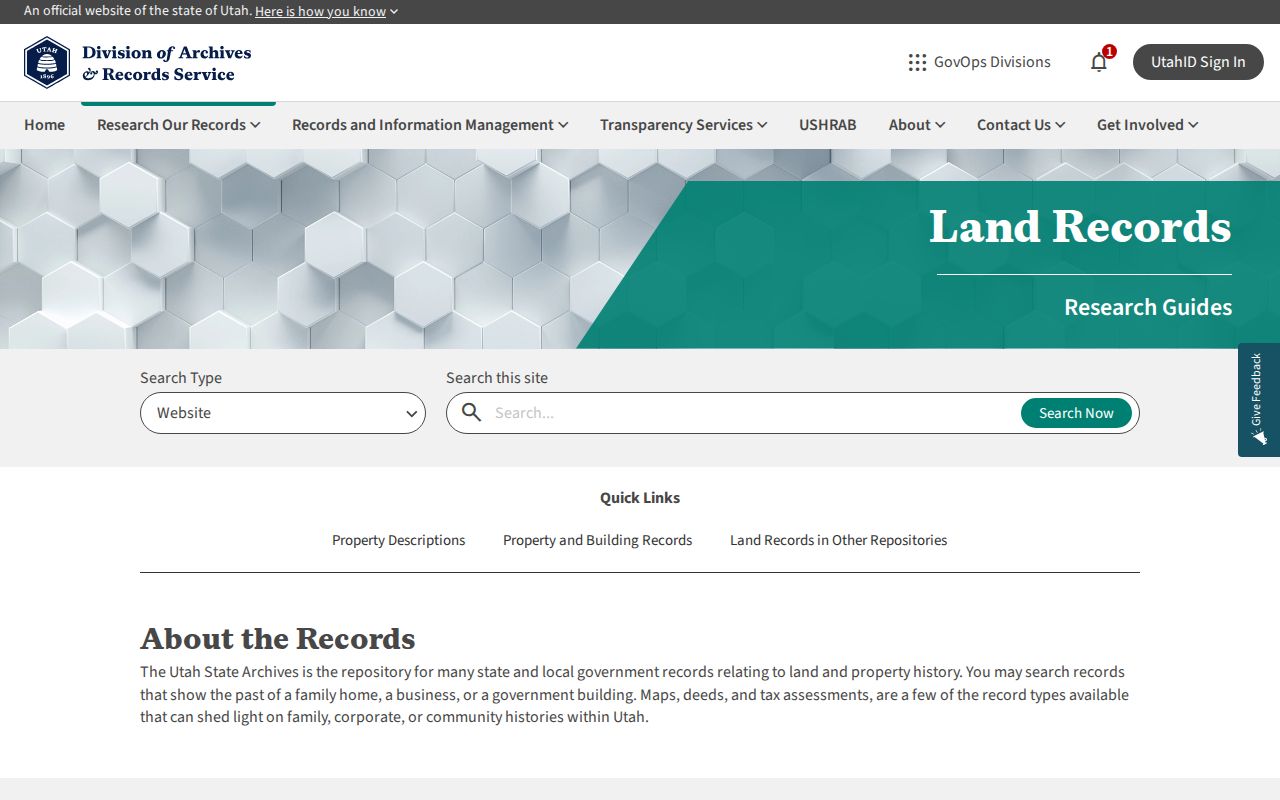
A catalog entry may name only the reel or book that holds the record. Always confirm with the archives how a copy can be viewed or ordered before counting on it.
Sevier County House-History Collections
The County Archives Hub lets you search by keyword or browse by book, photograph, town, topic, or person. You can save items to a personal list. Staff can pull material for you. A physical research room is open for visits too. The Hub has no complete city-directory run, newspaper archive, obituary index, or cemetery database, so ask staff directly whether a named collection covers your address or family before planning a trip.
Directory listings, newspaper notices, and family photographs add rich context about a former owner. They still cannot replace the deed. The archive catalog points you toward local material. The County Recorder's recorded instrument is the evidence that proves a Sevier County land transfer. Treat each archive find as a lead, then tie it back to the parcel's legal description and the recorded deed.
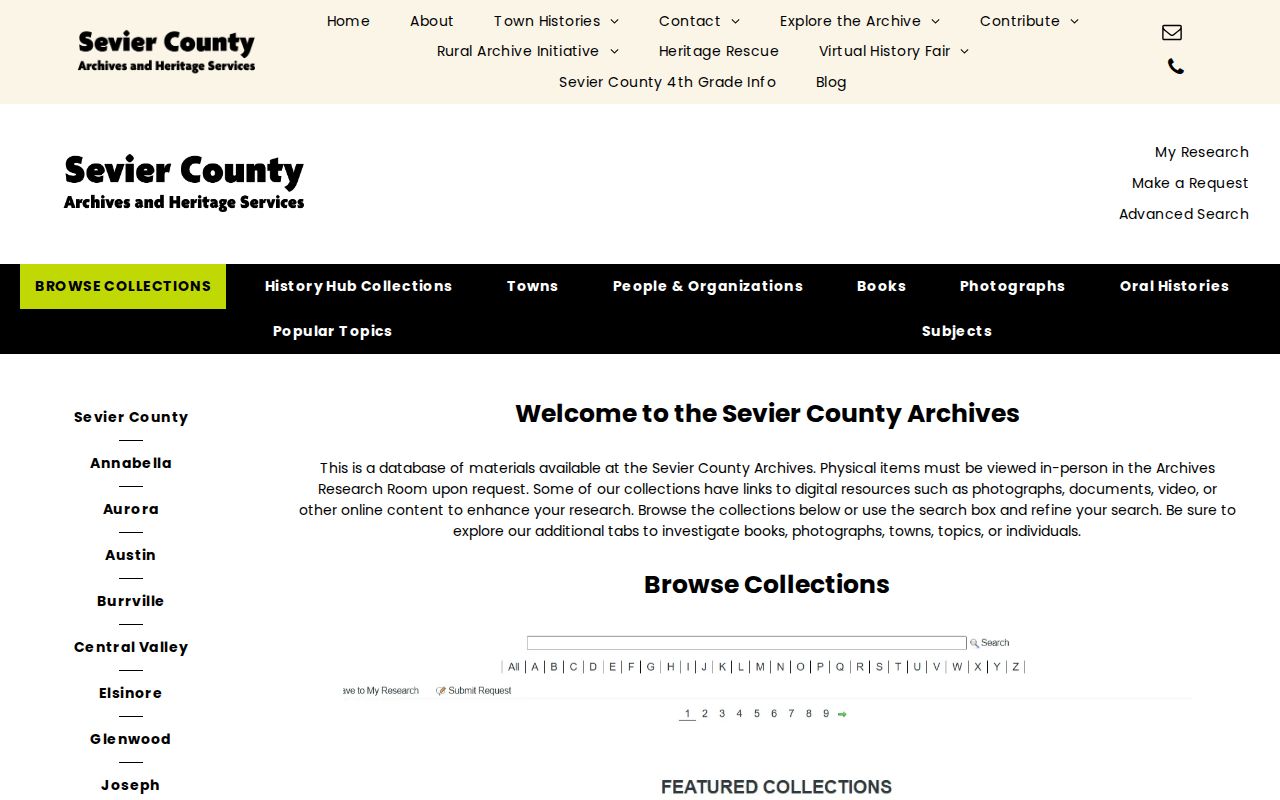
Use an archive item as a research lead, then connect it back to the parcel's legal description and recorded deed.
Sevier County Estate Transfers
Death changed how Sevier County land moved between generations. The paper trail looks different from a standard sale deed. A probate inventory or appraisal valued the estate. Letters of appointment named the personal representative. A court order, an executor or administrator deed, an affidavit, or a later conveyance completed the transfer. Search the decedent, the spouse, the heirs, and the legal description in public Xchange and the Recorder's index. The probate docket explains who had authority and why. But the recorded transfer remains the instrument that confirms the new owner of record.
Utah's vital records office controls certified death records. Eligible requesters must meet current identification and relationship rules. The office does not publish fixed confidentiality periods or fees in advance. For older probate material, the Utah State Archives series catalog is the better starting point. Never infer ownership from an obituary or a death certificate alone.
Utah's 1888 Sevier County Index Framework
Utah's 1888 recorder framework split land documentation into distinct classes. There were entry books, grantor and grantee indexes, abstracts, and map or plat indexes. Each served its own purpose. That structure still shapes a historical Sevier County owner search today. That is why the work may touch several books instead of one modern parcel field.
Entry books captured the bare essentials. These were names, a date and time, a brief description, and an entry number. Subdivision indexes then tied a plat or legal location to the tax and deed records. Those records sit alongside it.
Sevier County's first deed-book run has no confirmed start. The local electronic index omits its start year too. For a deep owner history, work backward from the current deed into the abstract. Then ask the Recorder or Archives about the older series. Resist guessing at a county organization date or an earliest online year. Neither figure appears in the record.