
Sevier County Property Value Types
Sevier County property values come in several flavors. The Assessor publishes a market value. Ex exemptions to reach a taxable value. The county splits land from improvements as separate amounts. A recorded deed may list the consideration for one specific transfer. Whenever you pull a figure from Sevier County property records, carry the value label, the tax year, and the source along with it. Mixing unlike fields is the fastest way to misread a parcel. A property can appear to change value. But the records are simply answering different questions.
| Value | What It Is | Where |
|---|---|---|
| Market value | Assessor's estimate under the open-market standard | Assessor / GIS |
| Taxable value | Value to which tax rates apply after exemptions | Assessor / GIS |
| Last sale consideration | Transaction amount if stated in the recorded instrument | Recorder deed; display not verified |
| Land / improvements | Separate market-value components | County parcel layer |
Market value is an estimate. It assumes a theoretical open-market sale with reasonable exposure and informed, unrelated parties. The taxable figure comes after exemptions and before tax rates apply. A sale price, by contrast, records what buyer and seller agreed to in one transaction. It does not automatically reset the Assessor's estimate. For details on the bill itself, see the separate Sevier County property tax records page.
Find a Sevier County Property Value
Start with the Recorder-Assessor Account Search. It locates a value by address or by parcel number. Sevier County's account description pulls together the owner of record, value, taxes, and legal information. Recorded documents abstracted to the parcel appear there too. The GIS layer offers a second view of the value components. It also shows the tax year behind them. Field names vary by account. So treat each result on its own terms rather than expecting a fixed layout.
- Find the account from its situs address or parcel number.
- Record Market_Value_Land, Market_Value_Improvements, Taxable_Value, and Tax_Year separately.
- Read the assessment-code fields without merging market and taxable categories.
- If comparing a past sale, locate the deed and confirm whether the instrument states consideration.
- Market value
- The Assessor's estimate of open-market value as of the applicable valuation date.
- Taxable value
- The amount used to apply tax rates after any qualifying exemption.
- Sale consideration
- The amount recorded for a transaction if stated in the deed.
- Reassessment
- The annual updating of assessed market values and periodic review of property characteristics.
What Sevier County Value Does Not Mean
The Assessor's market value is a tax valuation. It is not an appraisal for a pending sale, a loan, or a construction project. It can differ from a recent sale. The valuation date, the property characteristics, and the circumstances of the transaction all differ. Taxable value is not the market amount either. Utah's primary-residence exemption lowers the base that tax rates apply to. Read any Sevier County property value alongside its field label and tax year.
Value is not price. A Sevier County assessment does not state what a parcel would sell for. Use a licensed appraiser for a valuation opinion tied to a transaction.
Sevier County's January Value Date
Utah leans on a single date for property taxes: January 1. The market value on that day sets the taxable value for the year. Sevier County assessors refresh values every year. They also take a close look at each parcel's physical details at least once every five years. That cadence matters. A parcel can hold steady while its value climbs. The assessment changed rather than the land itself.
Notice timing follows the same rhythm each year. Valuation notices tend to land in late July. Tax notices follow near the start of November. Both should indicate whether the primary-residence exemption is in play. Check the year printed beside any value, too. An old notice should never stand in for the current assessment. For the parcel-specific figure, the county account remains the source.
Utah's Sevier County Taxable Value
Utah exempts 45 percent of fair market value for qualifying primary residences. Taxable value is therefore generally 55 percent of market value after the exemption. The rule covers the home, associated improvements, and up to one acre. A primary residence generally requires 183 or more consecutive days of occupancy. The state names declaration forms for claiming the exemption. Cabins, vacation homes, timeshares, and transient properties do not qualify. The county publishes no specific local ordinance on the application rules. Ownership or use changes can affect how the exemption is handled.
Remember what the exemption changes. It adjusts the tax base. It does not mean the county market-value field equals 55 percent of a sale price. Check the current notice and the Assessor account. That way you avoid comparing taxable and market values drawn from different years.
Sevier County Land and Improvement Values
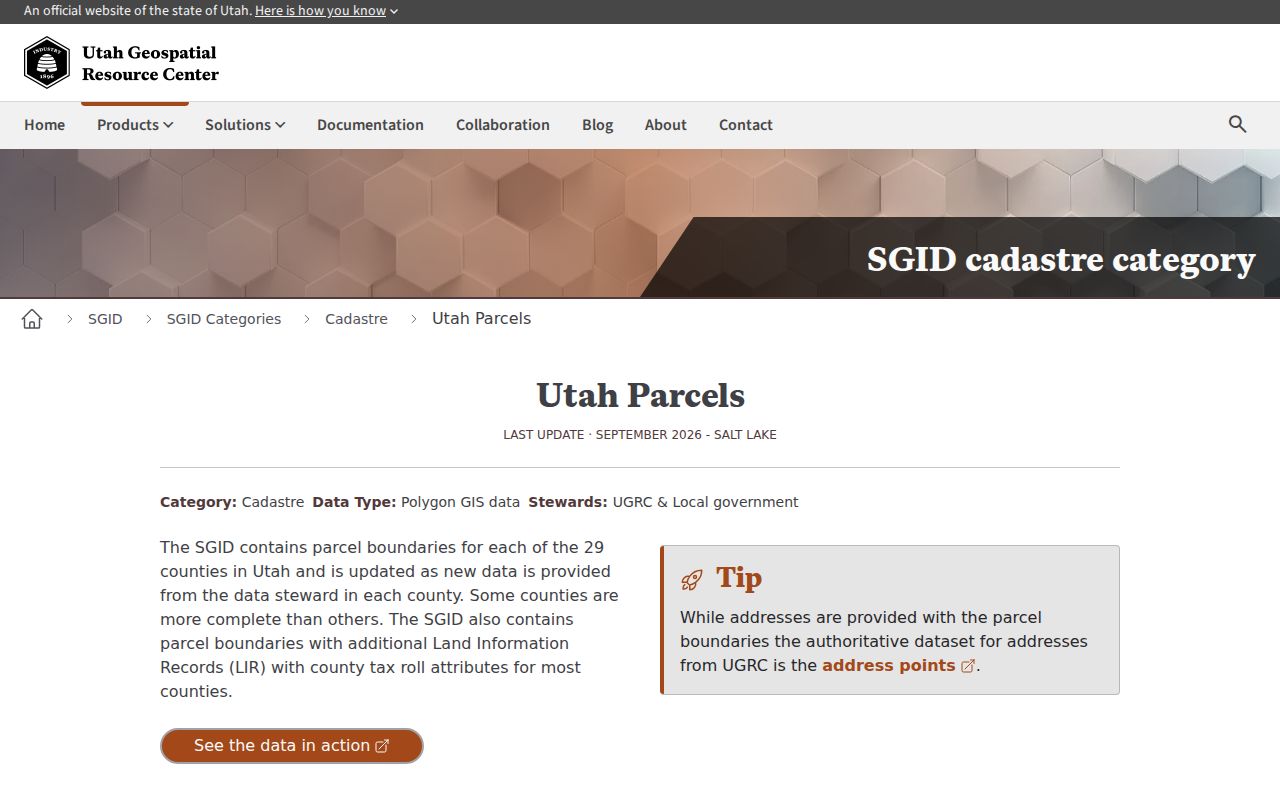
The Sevier County parcel layer separates Market_Value_Land from Market_Value_Improvements. It also carries Taxable_Value, Tax_Year, Total_Taxes, Assessment_Code, Assessment_Code_Market_Value, and Assessment_Code_Taxable_Value. Those distinct fields show land and building components. The tax value actually used after exemptions sits right beside them. The assessment calculation for a particular parcel depends on its account and exemption status. The state parcel page shows the Sevier services and their data fields.
Note: Record each number with its original field name so market and taxable values never get mixed.
Sevier County's Tax-Year Value Caveat
The Recorder-Assessor About page draws one precise local line. Property information is current except for taxable value, which is calculated for the current tax year. A parcel account can therefore carry an up-to-date owner, legal, or situs entry. The taxable value, meanwhile, belongs to a named year. The county publishes no fixed number of days for owner-roll updates after a deed records. When checking a Sevier County property value, read the field label and the year together. If a recent transfer seems to clash with the account, compare the deed records. Then ask the Assessor which value year is displayed. A current market estimate, a current taxable value, and the amount owed to the Treasurer are three separate entries, so treat each label as its own fact.
Sevier County Recorded Sale Price Limits
A deed records the transfer and its consideration. However, Sevier County has no account field that always displays the sale price. The Recorder's Document Search leads to the index entry. Document images are viewed at the Recorder's office itself. That price is a transaction fact, nothing more. A parcel review may find it useful. Yet it is not automatically the Assessor's market value or a current appraisal.
Before treating any sale amount as a match, compare the instrument date. Then compare the legal description against the account. One deed might cover only a partial interest. It might instead bundle several parcels into a single property package. The transfer amount alone says nothing about tax treatment. For a Sevier County property value, keep sale, market, and taxable figures in separate columns.
Sevier County Value Data Over Time
The Utah Geospatial Resource Center lists Sevier in several 2025 and 2026 basic parcel update cycles. Its land-information-record service refreshes annually, whenever the county submits year-end tax-roll data. The statewide layer can carry property class, primary-residence status, square footage, floors, year built, subdivision, and value fields. It all depends on what the county supplies. A state release works well for a dated comparison. Still, it may not match the live Sevier County account field by field.
Sevier County publishes no city-level assessed-value trend series. Richfield's plat chronology maps development geography rather than appreciation. The same goes for Salina's older subdivision entries and Monroe's survey fields. A defensible value comparison requires the same Assessor market-value fields. Gather them for the same parcel set and tax years. Date every download.
When a Sevier County Value Seems Wrong
A value disagreement belongs with the county assessment appeal process. It is not a hunt for the tax bill. The Sevier County Clerk/Auditor page posts the local appeal route and its forms. Utah Tax Commission materials explain the statewide practice. Take the specific annual deadline from the current valuation notice. Bundle the parcel number, legal description, tax year, and evidence. Keep it all around the January 1 market date.
Value pages explain what the numbers mean. Payment, exemption, and appeal detail sit with Sevier County tax records. A public account helps locate the value. But it never decides an appeal.